The Correlation between the Length of Piano Concerto Cadenzas and Composers' Nationalities

Apr 14, 2025 By Victoria Gonzalez

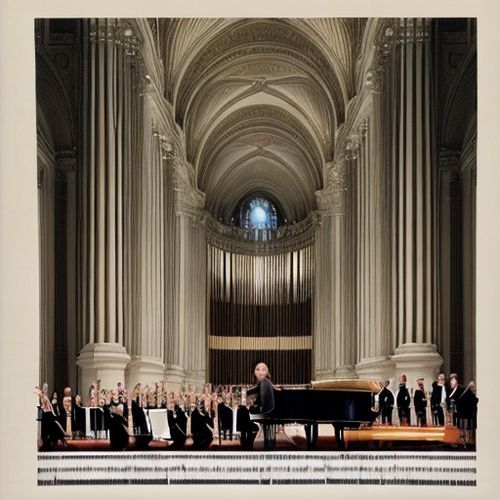
The relationship between the length of piano concerto cadenzas and the nationality of composers presents a fascinating intersection of cultural expression and musical architecture. While cadenzas traditionally serve as virtuosic showcases for soloists, their duration and structural complexity often reflect deeper compositional philosophies tied to national schools. This phenomenon reveals how geographic and cultural contexts shape even the most ostensibly personal moments in classical music.


German composers, particularly those of the Romantic era, tended to approach cadenzas with a sense of architectural proportion. Beethoven's piano concertos, while containing relatively brief cadenzas compared to later Romantic works, establish a paradigm where the soloist's improvisation serves the symphonic argument rather than overwhelming it. This Teutonic discipline becomes even more pronounced in Brahms's two piano concertos, where the cadenzas feel like organic outgrowths of the musical material rather than gratuitous displays. The German tradition emphasizes the cadenza's role within the concerto's overall narrative arc, resulting in passages that are substantial yet never disproportionate to the work's larger structure.


In contrast, Russian composers frequently treated the cadenza as a miniature tone poem within the concerto. Rachmaninoff's Paganini Rhapsody contains what might be considered the apotheosis of this approach - a cadenza that essentially becomes the emotional climax of the entire work. The Russian school's cadenzas often unfold with a novelistic expansiveness, particularly in works by Tchaikovsky and Scriabin, where the soloist's technical display merges seamlessly with lush harmonic exploration. This tendency toward extended, dramatically charged cadenzas mirrors the Russian literary tradition's embrace of psychological depth and emotional excess.


French composers approached the cadenza with a characteristically Gallic sensibility for precision and clarity. Saint-Saëns and Ravel crafted cadenzas that sparkle with crystalline passagework, their durations carefully calibrated to maintain the overall work's neoclassical balance. The French cadenza often functions as a sort of musical haiku - brief yet densely packed with meaning, where every note serves a deliberate purpose. This aesthetic produces cadenzas that may seem modest in duration but extraordinary in their concentrated expression, reflecting the French cultural values of economy and elegance.


The Polish tradition, exemplified by Chopin, presents an interesting hybrid approach. While Chopin's two concertos contain relatively brief cadenzas by later Romantic standards, they achieve remarkable emotional intensity through sophisticated harmonic alchemy rather than sheer duration. This approach reflects the Polish character of zal - a untranslatable concept blending melancholy, pride, and nostalgia. The cadenzas in Chopin's works serve as concentrated expressions of this national psyche rather than extended technical exhibitions.


American composers in the 20th century developed cadenzas that often reflected the nation's cultural melting pot. Gershwin's Rhapsody in Blue contains cadenza-like passages that blend European classical traditions with jazz improvisation's spontaneity. Meanwhile, composers like Barber and Bernstein created cadenzas that mirror American cultural traits - sometimes brash and expansive, other times introspective and concise. The American cadenza frequently serves as a platform for stylistic synthesis rather than pure virtuosic display.


The Scandinavian approach, particularly in Grieg's Piano Concerto, demonstrates how national romanticism influenced cadenza length and character. Grieg's expansive cadenza in the first movement functions almost as a self-contained dramatic episode, mirroring the sweeping Nordic landscapes that inspired the composer. This tendency toward nature-evoking expansiveness in Scandinavian cadenzas creates a distinctive national fingerprint within the concerto repertoire.


Italian composers maintained a unique relationship with the cadenza, given the form's origins in opera. While early Classical Italian concertos by composers like Clementi featured relatively brief cadenzas, later Italian virtuosos such as Busoni created cadenzas of extraordinary length and difficulty. The Italian approach often prioritizes pure musical theater - the cadenza as dramatic event rather than structural necessity. This operatic sensibility results in cadenzas that vary widely in duration but consistently aim for maximum emotional impact.


Contemporary composers have both embraced and subverted these national traditions in their cadenza writing. Some, like the Finnish composer Rautavaara, have created cadenzas that reference national folk traditions while expanding the form's temporal dimensions. Others have deliberately played with expectations - Luciano Berio's Sequenza for piano could be interpreted as an extended, deconstructed cadenza that comments on the entire Italian virtuoso tradition.


The study of cadenza length in relation to composer nationality reveals how deeply musical forms are embedded in cultural contexts. From the architectural German approach to the novelistic Russian style, from the concise French method to the hybrid American model, these variations demonstrate that even within the most standardized musical forms, national character finds expression. The cadenza, often considered the soloist's personal domain, turns out to be profoundly shaped by the composer's cultural heritage - a fascinating paradox at the heart of concerto writing.

Recommend Posts
Music

AI Analysis Reveals: Repetition of Chorus Unrelated to Popularity

By Emily Johnson/Apr 14, 2025

For decades, songwriters and producers have operated under the assumption that repeating a chorus multiple times within a pop song increases its chances of becoming a hit. The logic seems sound—catchy hooks lodged in listeners’ brains should theoretically translate to higher streaming numbers, radio plays, and chart success. However, recent AI-driven analysis of chart-topping songs reveals a surprising twist: there is no significant correlation between chorus repetition and a song’s popularity.
Music

Trend of Music Genre Fusion: An Average of 2.7 Styles Blended into Each Song"

By Laura Wilson/Apr 14, 2025

The music landscape has undergone a radical transformation in the past decade, with genre boundaries becoming increasingly fluid. What began as occasional cross-pollination between styles has evolved into a fundamental reshaping of how artists create and audiences consume music. The most striking manifestation of this shift is the current average of 2.7 genres blended per contemporary track - a statistic that would have been unthinkable during most of music history.
Music

Urban Soundscape Database Catalogs 100,000 Environmental Sounds

By Sophia Lewis/Apr 14, 2025

The urban soundscape has long been an overlooked dimension of city life, yet it profoundly shapes our daily experiences. A groundbreaking initiative has emerged to catalog and study these auditory environments: a comprehensive urban soundscape database containing over 100,000 distinct environmental sounds. This ambitious project represents more than just an archive—it's a living document of human civilization's sonic fingerprint.
Music

Century-long Evolution of Operatic Arias: Soprano Range Increases by 3 Semitones

By Olivia Reed/Apr 14, 2025

The operatic stage has witnessed a fascinating acoustic evolution over the past century, with one particularly striking phenomenon being the gradual rise in soprano vocal ranges. Musicologists have observed that the average tessitura for sopranos in opera houses has climbed approximately three semitones since the early 20th century, creating both new artistic possibilities and fresh challenges for composers and performers alike.
Music

Heavy Metal Music Spectrum Analysis: High Frequencies Damage Hearing the Fastest

By Amanda Phillips/Apr 14, 2025

For decades, heavy metal music has been synonymous with raw power, blistering guitar solos, and thunderous drums. But beneath the surface of this electrifying genre lies a less-discussed reality: the potential for accelerated hearing damage, particularly from the high-frequency elements that define its signature sound. Recent spectrum analysis reveals that the very frequencies that give metal its cutting edge may also be cutting into listeners' auditory health at an alarming rate.
Music

The Correlation between the Length of Piano Concerto Cadenzas and Composers' Nationalities

By Victoria Gonzalez/Apr 14, 2025

The relationship between the length of piano concerto cadenzas and the nationality of composers presents a fascinating intersection of cultural expression and musical architecture. While cadenzas traditionally serve as virtuosic showcases for soloists, their duration and structural complexity often reflect deeper compositional philosophies tied to national schools. This phenomenon reveals how geographic and cultural contexts shape even the most ostensibly personal moments in classical music.
Music

Global Music Streaming Audio Quality Preference Map: Demand for Lossless Audio

By Samuel Cooper/Apr 14, 2025

The global music streaming landscape is undergoing a quiet revolution as listeners increasingly demand higher-quality audio experiences. While compressed MP3s and standard streaming formats once dominated the digital music sphere, a growing segment of audiophiles and casual listeners alike are pushing platforms to adopt lossless audio technologies. This shift isn't happening uniformly across markets—geographical patterns reveal fascinating disparities in how different cultures prioritize sound quality versus convenience.
Music

Billboard Hot 100 Lyrics Complexity Drops 63% Over 40 Years

By Thomas Roberts/Apr 14, 2025

In the ever-evolving landscape of popular music, one trend has emerged with striking clarity: the lyrical complexity of Billboard hits has plummeted over the past four decades. A recent study analyzing chart-topping songs from 1980 to 2020 reveals a staggering 63% decline in linguistic sophistication. This seismic shift speaks volumes about changing listener preferences, industry dynamics, and the very nature of how we consume music in the digital age.
Music

Century-long Music Tonality Statistics: Increase in Minor Key Compositions"

By Jessica Lee/Apr 14, 2025

The landscape of classical music composition has undergone a subtle but significant shift over the past century. Where major keys once dominated concert halls and opera houses, recent research reveals an unmistakable trend: minor key works have been steadily increasing their share of the repertoire. This gradual transformation in tonal preference speaks volumes about changing artistic sensibilities and perhaps even broader cultural evolution.
Music

Spotify Data Reveals: Morning Playback Speed is 7% Faster than Nighttime

By Noah Bell/Apr 14, 2025

Ever noticed how your morning playlist feels a bit more energetic than the one you wind down with at night? It turns out, there’s data to back that up. According to a recent analysis of Spotify streaming patterns, songs played in the morning tend to be about 7% faster in tempo compared to those played in the evening. This fascinating insight reveals more than just a quirky listening habit—it uncovers the rhythm of our daily lives and how music subtly adapts to our moods and routines.
Music

E-Waste Recycling for Crafting Electronic Music Devices in Art"

By Ryan Martin/Apr 14, 2025

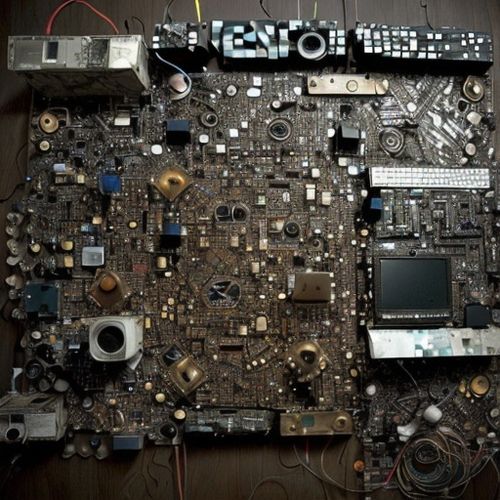
The intersection of electronic waste and artistic expression has given rise to a fascinating movement in contemporary art. Across the globe, innovative creators are transforming discarded circuit boards, broken keyboards, and obsolete gadgets into mesmerizing electronic music installations. This emerging art form not only challenges our perceptions of waste but also redefines the boundaries of sound creation.
Music

Music Industry Carbon Neutrality Roadmap: 2030 Target Likely Unattainable

By John Smith/Apr 14, 2025

The music industry's ambitious roadmap to achieve carbon neutrality by 2030 appears increasingly precarious, with mounting evidence suggesting that the sector may fall short of its environmental targets. Despite widespread commitments from major labels, streaming platforms, and touring companies, structural challenges and conflicting priorities have slowed progress toward meaningful decarbonization. What began as a rallying cry for sustainability now faces the harsh realities of economic pressures, technological limitations, and an ecosystem resistant to rapid transformation.
Music

Antarctic Ice Melt Sounds Turned into Environmental Warning Album

By Lily Simpson/Apr 14, 2025

The haunting symphony of melting ice in Antarctica has found an unexpected audience far beyond the scientific community. A team of glaciologists and sound artists recently collaborated to transform raw hydrophone recordings from beneath the ice shelves into a startling environmental album titled "Antarctic Elegy: The Sound of Disappearing Worlds." This unconventional project bridges art and science to deliver what may be the most visceral climate change warning ever recorded.
Music

Market Share of Biodegradable Guitar Picks Less Than 5%

By William Miller/Apr 14, 2025

The guitar pick, a small but essential tool for musicians, has remained largely unchanged for decades. Most picks are still made from plastic materials like celluloid or nylon, which can take centuries to decompose. Yet, despite growing environmental awareness across industries, biodegradable guitar picks have struggled to gain traction, currently holding less than 5% of the market share. This slow adoption raises questions about consumer habits, manufacturing challenges, and the broader shift toward sustainability in the music industry.
Music

Low-frequency Noise Interference from Wind Power Farms Disrupts Outdoor Music Festivals

By Eric Ward/Apr 14, 2025

The serene countryside, with its rolling hills and open skies, has long been a favored location for outdoor music festivals. The natural acoustics and picturesque settings create an unparalleled experience for both performers and audiences. However, a new challenge has emerged in recent years, one that threatens to disrupt this harmony: the low-frequency noise generated by nearby wind farms.
Music

Ban on Musical Instrument Timber Trade Impacts Cello Manufacturing Industry

By Megan Clark/Apr 14, 2025

The global trade in rare tonewoods has long been the lifeblood of fine instrument making, but recent conservation measures have sent shockwaves through the world of cello craftsmanship. For generations, luthiers have relied on specific species like Brazilian rosewood and certain mahoganies to create instruments with unparalleled resonance. These woods, now protected under international agreements, are becoming increasingly difficult to source legally, forcing master craftsmen to reconsider centuries-old traditions.
Music

Vinyl Record Production Emits 80 Times More Carbon than Digital Music

By Ryan Martin/Apr 14, 2025

The music industry has undergone a dramatic transformation over the past few decades, shifting from physical formats like vinyl records to digital streaming platforms. While this evolution has brought unparalleled convenience to listeners, it has also sparked debates about the environmental impact of music consumption. A recent study has revealed a startling fact: producing a vinyl record generates up to 80 times more carbon emissions than the equivalent digital music file. This revelation forces us to reconsider the romanticized notion of vinyl as a purely nostalgic and sustainable medium.
Music

Feasibility Study on Off-Grid Operation of Solar Energy Music Studio

By Noah Bell/Apr 14, 2025

The concept of an off-grid solar-powered music studio represents a fascinating intersection of renewable energy and creative innovation. As the world shifts toward sustainable solutions, musicians and producers are exploring ways to reduce their carbon footprint without compromising on sound quality or workflow efficiency. The feasibility of such a setup depends on multiple factors, including energy requirements, equipment selection, and location-specific solar potential.
Music

Acoustic Testing of Bamboo as a Substitute for Rosewood in Guitar Fingerboards

By Lily Simpson/Apr 14, 2025

In the world of guitar craftsmanship, the search for sustainable yet tone-rich materials has led luthiers to explore unconventional alternatives. One such innovation gaining attention is the use of bamboo as a substitute for traditional rosewood in guitar fingerboards. This shift isn't merely about environmental consciousness; it's a serious acoustic experiment that challenges long-held beliefs about tonewoods.
Music

Music Festival Waste Recycling Rate Report: Europe Averages Only 35%

By Sarah Davis/Apr 14, 2025

The vibrant energy of Europe's summer music festivals masks an inconvenient truth – mountains of waste left behind by revelers. New data reveals that European music festivals recycle just 35% of their waste on average, a startlingly low figure compared to leading events in other continents. Behind the pulsating beats and carefree dancing lies an environmental reckoning the industry can no longer ignore.