The music industry's ambitious roadmap to achieve carbon neutrality by 2030 appears increasingly precarious, with mounting evidence suggesting that the sector may fall short of its environmental targets. Despite widespread commitments from major labels, streaming platforms, and touring companies, structural challenges and conflicting priorities have slowed progress toward meaningful decarbonization. What began as a rallying cry for sustainability now faces the harsh realities of economic pressures, technological limitations, and an ecosystem resistant to rapid transformation.
A recent analysis by the Environmental Change Institute reveals that the carbon footprint of music consumption has actually grown by 18% since 2015, driven primarily by the explosion of energy-intensive streaming services and a post-pandemic surge in global touring. While vinyl production and physical distribution have declined, their environmental impact has been more than offset by the massive data centers powering digital platforms. "We're seeing a classic case of displacement rather than reduction," notes climate researcher Dr. Elena Petrov. "The industry celebrated the demise of plastic packaging while quietly building a far more energy-hungry monster."
The live music sector faces particularly daunting challenges. Major festivals like Glastonbury and Coachella have implemented recycling programs and renewable energy initiatives, but these measures barely scratch the surface of the emissions generated by audience travel, which accounts for nearly 80% of an event's carbon footprint. Touring artists find themselves caught between fan expectations for spectacular global productions and the environmental consequences of transporting elaborate stage shows across continents. Coldplay's much-publicized "sustainable" tour still generated an estimated 50,000 metric tons of CO2, equivalent to powering 6,000 homes for a year.
Record labels point to their progress in greening operations, with Universal Music Group achieving carbon neutrality in its direct operations through offsets and Warner Music transitioning to renewable energy for its offices. However, these achievements exclude the vast majority of emissions that occur throughout the value chain - from manufacturing to distribution to consumer playback. "Corporate headquarters running on solar power is commendable," says industry analyst Mark Henderson, "but it's like congratulating yourself for turning off the lights while your factory burns coal next door."
The streaming paradox presents perhaps the most complex hurdle. While eliminating physical media reduced waste, the shift to cloud-based consumption created new environmental costs. A single music stream requires data to travel through networks, servers, and devices - each step consuming energy. With over 100 million songs now available on major platforms and global streaming volumes exceeding 100 billion plays monthly, the cumulative energy demand is staggering. Recent calculations suggest the annual carbon cost of streaming exceeds that of the entire recording industry in the CD era.
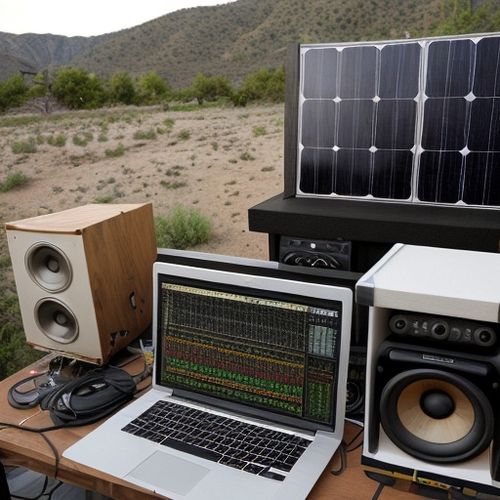
Emerging technologies offer glimmers of hope. Some companies are experimenting with blockchain solutions to track and offset emissions at the transaction level, while others are developing more energy-efficient audio codecs. Solar-powered recording studios and hydrogen-fueled tour buses have moved from concept to limited implementation. However, these innovations remain niche solutions without the scale or infrastructure to transform the industry. "We have pilot programs where we need paradigm shifts," admits Sony Music's sustainability lead Claire Yoshida.
The human element may prove the hardest to change. Consumer behavior continues to favor convenience over sustainability, with fans showing little willingness to reduce streaming quality or pay premium prices for "green" music products. Artists face intense pressure to maintain social media presence and constant content output - both energy-intensive activities. Meanwhile, the financial realities of the streaming economy leave little margin for environmental investment. "When 90% of artists earn less than $1,000 annually from streaming, asking them to fund carbon offsets is absurd," states musician and activist Javier Morales.
As the 2030 deadline approaches, some industry leaders are calling for a reassessment of targets and strategies. Rather than chasing an increasingly unrealistic carbon-neutral goal, they argue for focusing on measurable year-over-year reductions and investing in breakthrough technologies. Others maintain that only strict regulation can force the systemic changes needed. What's clear is that without accelerated action and radical collaboration across the ecosystem, the music industry's environmental promises risk becoming just another broken record.

By Emily Johnson/Apr 14, 2025

By Laura Wilson/Apr 14, 2025

By Sophia Lewis/Apr 14, 2025

By Olivia Reed/Apr 14, 2025

By Amanda Phillips/Apr 14, 2025

By Victoria Gonzalez/Apr 14, 2025

By Samuel Cooper/Apr 14, 2025
By Thomas Roberts/Apr 14, 2025

By Jessica Lee/Apr 14, 2025

By Noah Bell/Apr 14, 2025

By Ryan Martin/Apr 14, 2025

By John Smith/Apr 14, 2025

By Lily Simpson/Apr 14, 2025

By William Miller/Apr 14, 2025

By Eric Ward/Apr 14, 2025

By Megan Clark/Apr 14, 2025

By Ryan Martin/Apr 14, 2025
By Noah Bell/Apr 14, 2025

By Lily Simpson/Apr 14, 2025

By Sarah Davis/Apr 14, 2025