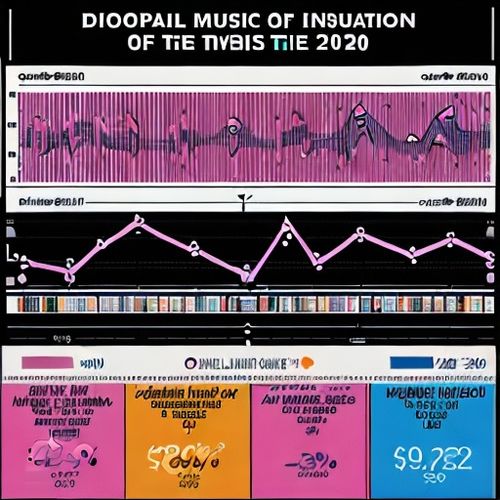
In the ever-evolving landscape of popular music, one trend has emerged with striking clarity: the lyrical complexity of Billboard hits has plummeted over the past four decades. A recent study analyzing chart-topping songs from 1980 to 2020 reveals a staggering 63% decline in linguistic sophistication. This seismic shift speaks volumes about changing listener preferences, industry dynamics, and the very nature of how we consume music in the digital age.
The research, conducted by computational linguists at several major universities, employed natural language processing tools to evaluate lexical diversity, syntactic complexity, and semantic density across thousands of Billboard Hot 100 entries. The findings paint a dramatic picture of simplification, with today's hits containing significantly fewer unique words, less varied sentence structures, and more repetitive phrases than their counterparts from the 1980s and 1990s.
What exactly constitutes this "dumbing down" of pop lyrics? The metrics tell a compelling story. Vocabulary range in top songs has narrowed considerably, with contemporary hits using about 20% fewer distinct words compared to 1980s chart-toppers. Sentence structures have become more predictable, favoring simple declarative statements over complex subordinate clauses. Perhaps most telling is the rise of repetitive hooks - the average chorus now repeats its central phrase nearly twice as often as choruses did forty years ago.
Industry veterans point to multiple factors driving this trend. The digital revolution has fundamentally altered how music is discovered and consumed. In an era of streaming platforms and shortened attention spans, songs must make an immediate impact. "You've got approximately seven seconds to grab a listener before they swipe to the next track," explains veteran producer Marcus Johnson, who has worked with multiple Grammy-winning artists. "Complex wordplay often requires time to unpack - time that today's listeners simply aren't willing to invest."
The globalization of pop music has also played a significant role. As American artists increasingly cater to international audiences where English may not be the first language, simpler lyrics become more accessible. This commercial reality creates powerful incentives for artists and songwriters to prioritize clarity and immediacy over linguistic virtuosity.
Cultural attitudes toward what constitutes "good" songwriting have shifted dramatically. Where previous generations might have praised poetic density and clever turns of phrase, today's metrics for success lean heavily on streaming numbers and social media virality. The algorithms that govern music discovery platforms tend to favor songs with easily digestible, repetitive elements that listeners can quickly memorize and sing along to.
This simplification isn't necessarily a negative development, argue some musicologists. They point out that pop music has always served multiple functions - as dance music, as emotional catharsis, as social glue - not just as a vehicle for sophisticated poetry. The reduced complexity may reflect pop music becoming more democratic and inclusive, removing barriers to participation and enjoyment.
However, critics lament the loss of lyrical craftsmanship that once characterized even mainstream hits. They point to classic songs from artists like Paul Simon, Joni Mitchell, or even 1980s pop acts like The Police, which managed to combine mass appeal with considerable linguistic artistry. The concern is that as lyrical standards decline, so too does the cultural conversation that pop music can facilitate.
The data reveals interesting genre-specific patterns within this broader trend. Hip-hop, often celebrated for its verbal dexterity, has seen the smallest decline in complexity, though even here the trend toward simplification is evident. Meanwhile, pop and EDM genres show the most dramatic reductions in linguistic sophistication, with many current hits employing vocabulary that would be easily understood by elementary school students.
Some artists are pushing back against this tide. A new generation of singer-songwriters, inspired by the lyrical traditions of folk and classic rock, are attempting to reintroduce complexity into mainstream music. Streaming platforms, despite their algorithmic biases, have also made space for more niche artists who prioritize sophisticated songwriting, creating alternative pathways to success outside the traditional hit-making machinery.
Music educators express concern about the long-term implications of this trend. As popular music becomes linguistically simpler, young people may have fewer opportunities to encounter rich language in their everyday media consumption. Some schools have begun incorporating analysis of classic song lyrics into language arts curricula as a way to counteract this development.
The recording industry itself appears divided on the issue. While many executives celebrate the commercial success of simpler songs, others worry about the artistic stagnation it may represent. "There's room in the marketplace for all kinds of music," notes A&R representative Lisa Chen. "The challenge is convincing investors that complexity can still sell in today's environment."
Looking ahead, it remains unclear whether this four-decade decline represents a permanent new normal or merely a phase in pop music's evolution. History suggests that artistic movements often develop in cycles, with periods of simplicity giving way to renewed interest in complexity. What seems certain is that the relationship between linguistic sophistication and popular success has fundamentally changed - and with it, the very nature of what we consider a "hit" song.
As listeners, we're left to ponder what might be gained and lost in this transformation. The democratization of pop music comes with undeniable benefits, making it more accessible to global audiences. Yet one can't help but wonder if something essential to music's power - its ability to surprise, to challenge, to articulate the ineffable - might be diminished when words become too simple to carry weightier meanings.
The story of declining lyrical complexity isn't just about music; it's a reflection of broader cultural shifts in how we communicate, consume media, and value artistry in an increasingly algorithm-driven world. As the data shows, the numbers don't lie - but whether this trend ultimately enriches or impoverishes our musical landscape remains very much an open question.
By Emily Johnson/Apr 14, 2025
By Laura Wilson/Apr 14, 2025
By Sophia Lewis/Apr 14, 2025

By Olivia Reed/Apr 14, 2025

By Amanda Phillips/Apr 14, 2025
By Victoria Gonzalez/Apr 14, 2025
By Samuel Cooper/Apr 14, 2025
By Thomas Roberts/Apr 14, 2025
By Jessica Lee/Apr 14, 2025

By Noah Bell/Apr 14, 2025
By Ryan Martin/Apr 14, 2025

By John Smith/Apr 14, 2025

By Lily Simpson/Apr 14, 2025

By William Miller/Apr 14, 2025

By Eric Ward/Apr 14, 2025

By Megan Clark/Apr 14, 2025
By Ryan Martin/Apr 14, 2025

By Noah Bell/Apr 14, 2025

By Lily Simpson/Apr 14, 2025

By Sarah Davis/Apr 14, 2025