The world of French wine is a labyrinth of tradition, terroir, and meticulous craftsmanship. Among the many tools available to enthusiasts and professionals alike, the humble barcode has emerged as an unexpected yet powerful ally in identifying and understanding wines from France's prestigious regions. While the romantic image of a sommelier deciphering a label through years of experience remains iconic, modern technology has quietly revolutionized how we interact with these bottles. The barcode, often overlooked in favor of more glamorous authentication methods, carries within its stripes a wealth of information waiting to be unlocked.
French wine barcodes follow the international EAN-13 standard, consisting of thirteen digits that reveal more than just pricing information. The first three digits typically represent the country code, with 300-379 assigned to France. However, the true magic lies in how French wine producers have adapted this global system to reflect their regional identities. Unlike mass-produced goods where barcodes serve purely logistical purposes, many French winemakers treat these digital fingerprints as an extension of their storytelling. The sequence of numbers can indicate not just the producer but sometimes even the specific appellation or vineyard block, creating a bridge between centuries-old traditions and modern traceability.
Decoding the relationship between barcodes and French wine regions requires understanding how producers register their codes. Larger appellations like Bordeaux or Burgundy often have dedicated ranges within the French barcode system, allowing for immediate regional identification. For instance, certain prefixes have become informally associated with specific négociants or cooperative wineries in Champagne. Meanwhile, smaller AOCs might share number ranges but differentiate themselves through subsequent digits that reference their geographical indicators. This system creates a hierarchical structure within the barcode itself, mirroring France's strictly regulated wine classification system.
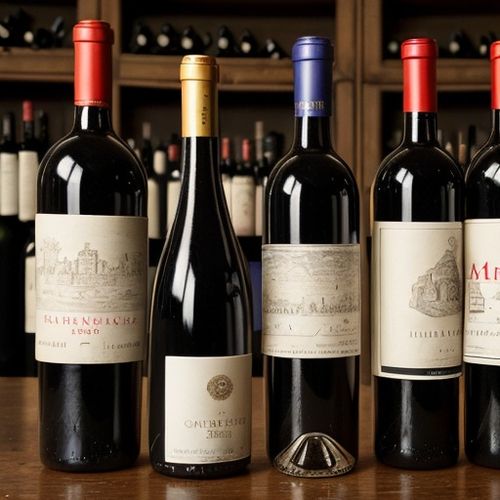
The practical applications of barcode identification extend far beyond supermarket checkouts. Wine authentication specialists have developed databases that cross-reference barcode information with harvest records, bottling dates, and distribution channels. This proves particularly valuable for detecting counterfeit wines in famous regions like Pauillac or Pomerol, where bottle fraud has become increasingly sophisticated. By analyzing patterns in barcode assignments across vintages, experts can spot inconsistencies that might indicate relabeled or tampered bottles. The barcode thus serves as a first line of defense against wine fraud while maintaining the discreet elegance preferred by French producers.
Regional characteristics manifest in surprising ways within barcode data. Provençal rosé producers, for example, tend to use distinct numbering sequences that reflect their position as volume leaders in French wine exports. The barcodes on these bottles often contain embedded information about their suitability for various export markets. Conversely, Burgundian domaines might use nearly identical barcodes across multiple vintages, emphasizing continuity rather than variation. These subtle differences in barcode implementation reveal fundamental philosophical differences between France's wine regions - some view their products as consistent brands, while others treat each vintage as a unique creation.
Technology has elevated barcode scanning from simple identification to rich educational experiences. Several mobile applications now allow consumers to scan French wine barcodes and instantly access detailed information about the producer's history, vineyard practices, and even recommended food pairings. This development has particularly benefited lesser-known AOCs like Jurançon or Savennières, whose stories often get overshadowed by more famous neighbors. The barcode becomes a portal connecting curious drinkers with narratives of soil composition, microclimates, and generations of winemaking families - all from a quick scan during a restaurant dinner or wine shop visit.
The future of French wine barcoding points toward even greater integration with blockchain technology and smart labels. Experimental programs in regions like Alsace and the Rhône Valley are testing two-dimensional barcodes that can store entire production histories, including organic certification details and sustainability practices. This evolution promises to make the already informative French wine barcode into a comprehensive digital dossier, further strengthening the connection between consumers and the storied regions behind their favorite bottles. As these technologies develop, they'll need to balance high-tech transparency with the romantic mystery that makes French wine so captivating - a challenge as delicate as crafting a grand cru.
Behind every French wine barcode lies a story of regional pride and global commerce. From the sun-baked vineyards of Languedoc to the chalky slopes of Champagne, these unassuming stripes carry the weight of appellation laws, export strategies, and centuries of viticultural wisdom. They represent France's remarkable ability to marry tradition with innovation - encoding the soul of terroir into a language readable by machines. For those who know how to look, the barcode offers not just identification, but insight into the complex, beautiful world of French wine regions and their ongoing dialogue with the digital age.
By Jessica Lee/Apr 14, 2025
By Michael Brown/Apr 14, 2025
By Michael Brown/Apr 14, 2025
By Emma Thompson/Apr 14, 2025
By Elizabeth Taylor/Apr 14, 2025
By Eric Ward/Apr 14, 2025
By Amanda Phillips/Apr 14, 2025
By Sarah Davis/Apr 14, 2025
By Emily Johnson/Apr 14, 2025
By Noah Bell/Apr 14, 2025
By Natalie Campbell/Apr 14, 2025
By Emma Thompson/Apr 14, 2025
By Sophia Lewis/Apr 14, 2025
By Natalie Campbell/Apr 14, 2025
By Samuel Cooper/Apr 14, 2025
By Thomas Roberts/Apr 14, 2025
By Benjamin Evans/Apr 14, 2025

By Eric Ward/Apr 14, 2025
By Olivia Reed/Apr 14, 2025
By Jessica Lee/Apr 14, 2025